Prices
Vegan groceries are often the cheaper ones
~25%Cheaper than typical diets across 150 countries
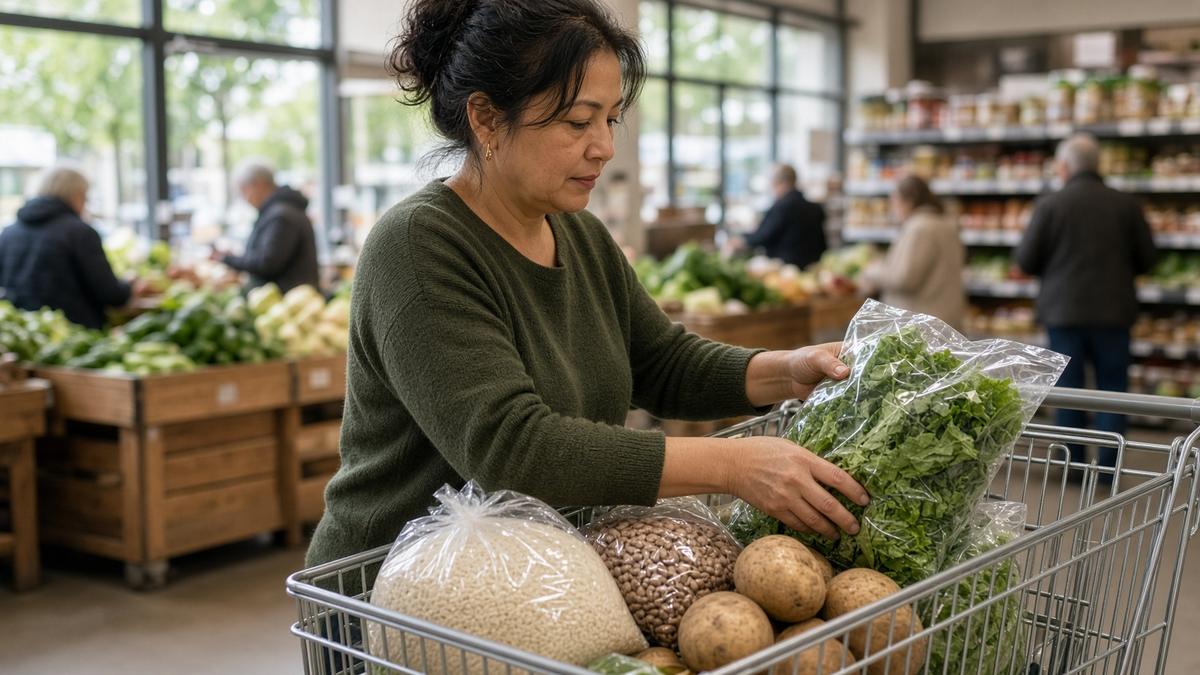
Vegan diets are generally the cheapest way to eat, costing about a quarter to a third less than typical diets across 150 countries[1][2]. In U.S. trials, people’s grocery bills dropped when they went vegan[3][4]. Staples like beans, rice, oats, and potatoes cost far less than meat and dairy, so going vegan saves you money too.
What the evidence says
The main points first. Every claim is tied to a source below.
Across 150 countries, vegan diets were the cheaper option
Springmann and colleagues worked out the cost of healthy, sustainable diets in 150 countries and found that vegan and vegetarian diets were generally the most affordable[1]. In high-income countries, a vegan diet cut food costs by up to about one third compared with a typical diet heavy in meat[1][2].
Read full article →In a trial, a vegan diet cut grocery bills by about 16%
In a trial by Kahleova and colleagues, overweight adults who were randomly assigned to a low-fat vegan diet spent about 16% less on food, more than $500 a year[1], while the control group’s spending didn’t change[1]. The savings came from spending less on meat and dairy[1].
Read full article →In a trial, a vegan diet cost less than a Mediterranean diet
In a crossover trial by Kahleova and colleagues, people spent 19% less on groceries on a vegan diet than on a standard American diet[1], and 25% less than on a Mediterranean diet[1], which is often sold as the affordable way to eat healthy.
Read full article →A whole-food plant-based diet cost $9.78 a day, compared with $15.72 for a typical diet
In a study that priced meals as people actually ate them, a whole-food plant-based diet cost $9.78 a day[1], about 38% less than the typical diet ($15.72) and about 23% less than the DASH diet[1], which still includes dairy, fish, and chicken and turkey flesh.
Read full article →Plant-based shoppers in Portugal spent less on food
Pais and colleagues found that in Portugal, vegans and other plant-based eaters spent less on food than omnivores did[1], which goes against the idea that plant foods are always an expensive luxury.
Read full article →Articles
Vegan groceries cost less
Across 150 countries and in U.S. clinical trials, vegan diets came out cheaper than typical diets, with food bills 16% to 38% lower depending on the comparison. The money people saved came from not buying meat and dairy.
Read full article →
Sources
Papers and datasets. Each card keeps its caveats, including small samples and single-animal cases.
[1]The Lancet Planetary Health, 2021 · Review
Vegan and vegetarian diets were generally the cheapest across 150 countries
Springmann and colleagues modeled diet costs in 150 countries and found vegan and vegetarian diets were generally the most affordable. In high-income countries, a vegan diet cut food costs by up to about a third (25–29%) compared with current typical diets.
[2]University of Oxford · Review
Sustainable eating is cheaper and healthier, an Oxford study finds
The University of Oxford’s write-up of the Springmann study says vegan diets were the most affordable option in countries such as the U.S., UK, and Australia, cutting food bills by up to a third.
[3]JAMA Network Open, 2023 · Clinical
Going vegan cut food costs 16% in a randomized trial
In a secondary analysis of a randomized trial in adults with overweight, a low-fat vegan diet cut total food costs by about 16% ($1.51 a day, or more than $500 a year), while costs didn’t change on the control diet. The savings came from dropping meat and dairy.
[4]JAMA Network Open, 2024 · Clinical
A low-fat vegan diet cost 25% less than a Mediterranean diet
In a crossover trial, groceries on the low-fat vegan diet were 19% cheaper than a standard American diet and 25% cheaper than a Mediterranean diet, saving about $2.40 a day compared with the Mediterranean diet.
[5]American Journal of Clinical Nutrition, 2024 · Clinical
A whole-food plant-based diet cost 38% less than a typical diet
In a post-hoc analysis of the meals people actually ate, a whole-food plant-based diet cost $9.78 a day, compared with $15.72 for the typical diet they ate at the start (about 38% less) and $12.74 for the DASH diet (about 23% less).
[6]Agricultural and Food Economics, 2022 · Observational
Plant-based eaters in Portugal spent less on food
In a survey of Portuguese consumers, plant-based eaters, especially vegans, tended to spend less on food than omnivores.