
AI
Next to animal agriculture, all the world’s data centers use practically nothing.
1.4 millionabout 1.4 million prompts to match the water in one cow-flesh burger
Going by OpenAI’s figure for the water in a single prompt[1] and the University of Michigan study of how much water a quarter-pound non-vegan patty takes[2], you would need about 1.4 million prompts to equal the water in one cow-flesh burger[1][2]. Plant burgers with the same taste and flavor already exist, and they use 99% less water[2][3], 93% less land[2][3], and 90% fewer greenhouse gases[2][3], with no animal cruelty. Farm animals produce about 7.1 billion tonnes of greenhouse gases a year[13], about 14.5% of the human total[12][13], while all of the world’s data centers emit about 180 million tonnes of CO₂[12], roughly 40 times less[12][13]. If you really wanted to save land, water, climate, and animals, you would stop harming animals.
What the evidence says
The main points first. Every claim is tied to a source below.
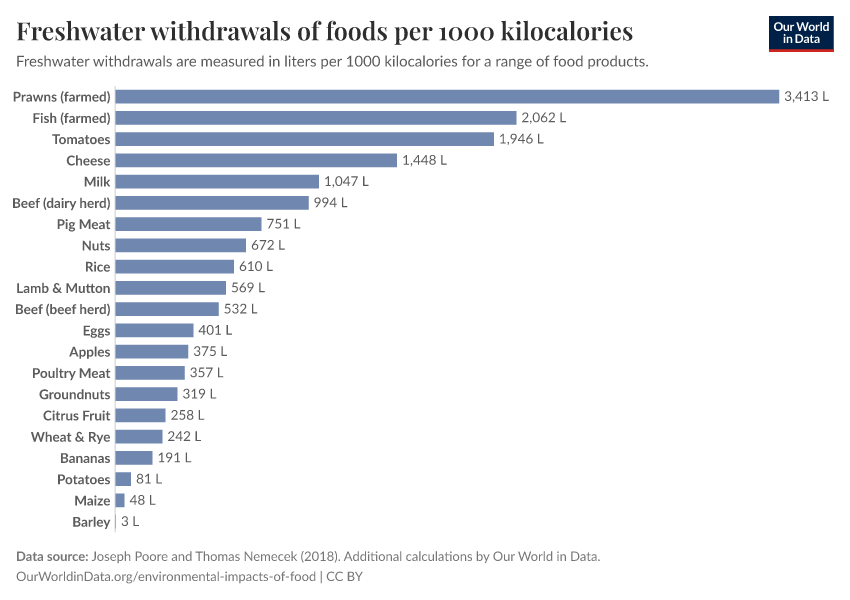
Our World in Data · Poore & Nemecek (2018)
Farm animals use about 200 times more freshwater than AI is projected to use
Wisser and colleagues (2024) estimated that animal agri-food systems consume about 228 km³ of freshwater a year[1], with feed production accounting for more than 90% of those withdrawals[1]. Morgan Stanley’s September 2025 analysis projected water use linked to AI data centers at about 1,068 billion litres a year by 2028, roughly 1 km³[2]. 228 divided by 1.07 is about 213. Lawrence Berkeley National Laboratory’s 2024 report on U.S. data centers lands in the same neighborhood at national scale[3]. Farm animals still dwarf the machines even after you add the water used to generate the electricity[3]. CBS News, using LBNL and University of Twente numbers, noted that Americans use more water to grow food, especially meat, than all U.S. data centers use combined[3][4].
Read full article →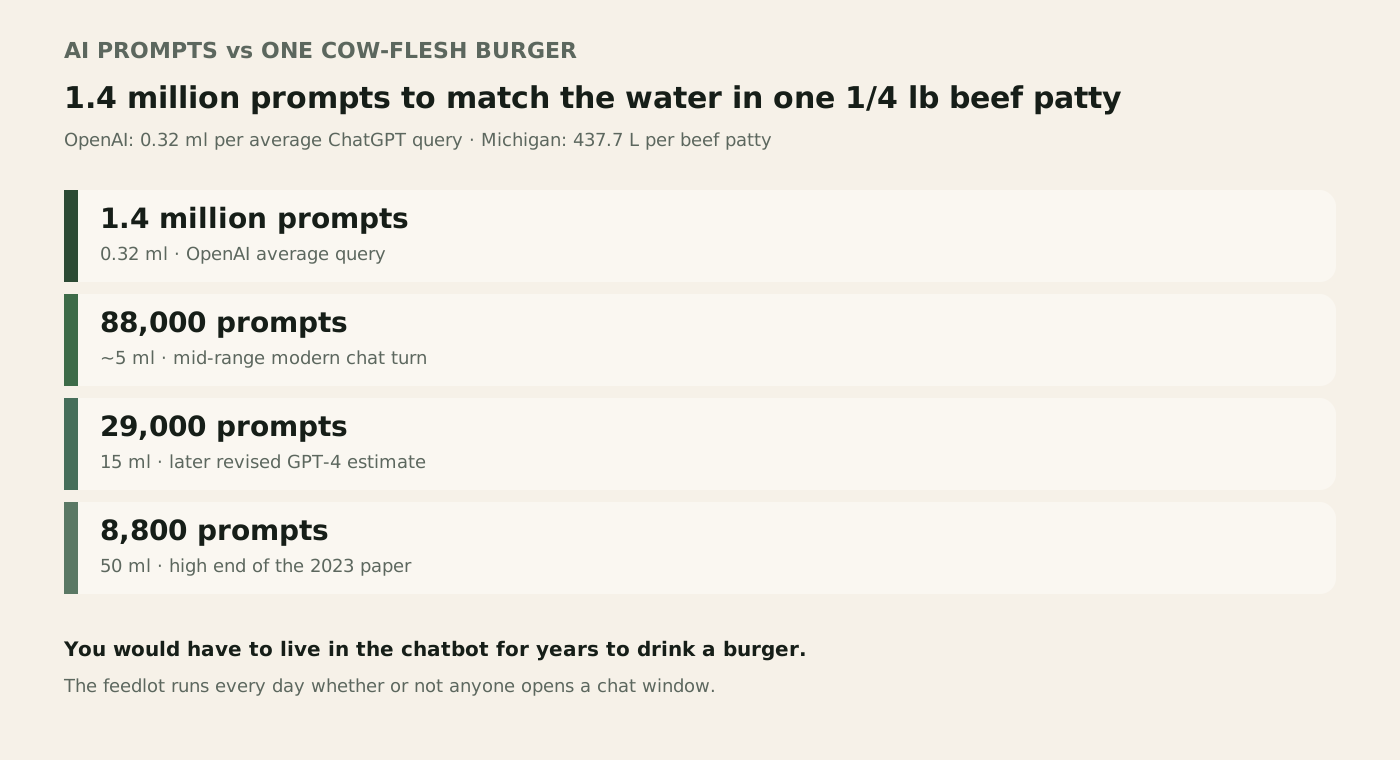
OpenAI query water · University of Michigan Beyond Burger LCA
One cow-flesh burger is about 1.4 million AI prompts
Going by OpenAI’s figure for the water in a single prompt[1] and the University of Michigan study of how much water a quarter-pound non-vegan patty takes[3], you would need about 1.4 million prompts to equal the water in one cow-flesh burger[1][3].
OpenAI put an average ChatGPT query at about 0.32 millilitres[1]. Michigan put that patty at 437.7 litres[3]. Divide one by the other and you get about 1.4 million[1][3].
Depending on the source and the calculation, the figure runs from about 8,800 to 5.5 million prompts[1][2][4]. The low end, about 8,800, comes from Li et al. 2023[2], which put a GPT-3 reply at about 50 millilitres[2]. The high end, about 5.5 million, is OpenAI’s 0.32 millilitres[1] against Mekonnen and Hoekstra, who put a quarter pound of beef near 1,750 litres (about 460 gallons)[4].
The 437.7 litres figure counts only blue water, meaning water from rivers, lakes, and wells. It leaves out green water, the rain that falls on pasture and feed, so the full amount is higher. Many people wrongly assume these water figures are based on green water.
You would have to live in the chatbot for years to drink a burger. The feed-and-trough loop runs every day, for tens of billions of animals, whether or not anyone opens a chat window.
Read full article →Why we don’t use the bottle-per-email number
A 2024 Washington Post article said ChatGPT used about 519 millilitres of water to write a 100-word email, a little more than a bottle, and the number spread widely[1].
It modeled GPT-4 writing a full email, which is neither an average prompt nor the figure OpenAI later published (about 0.32 millilitres)[3]. The paper underneath those headlines, Li et al. 2023, put a medium-length GPT-3 reply at about 10 to 50 millilitres[2], not a bottle each[2]. Headlines flattened that into a bottle per email.
OpenAI’s published average[3] and the Michigan burger study give about 1.4 million prompts per burger[3], and other studies set the range around it[2].
Read full article →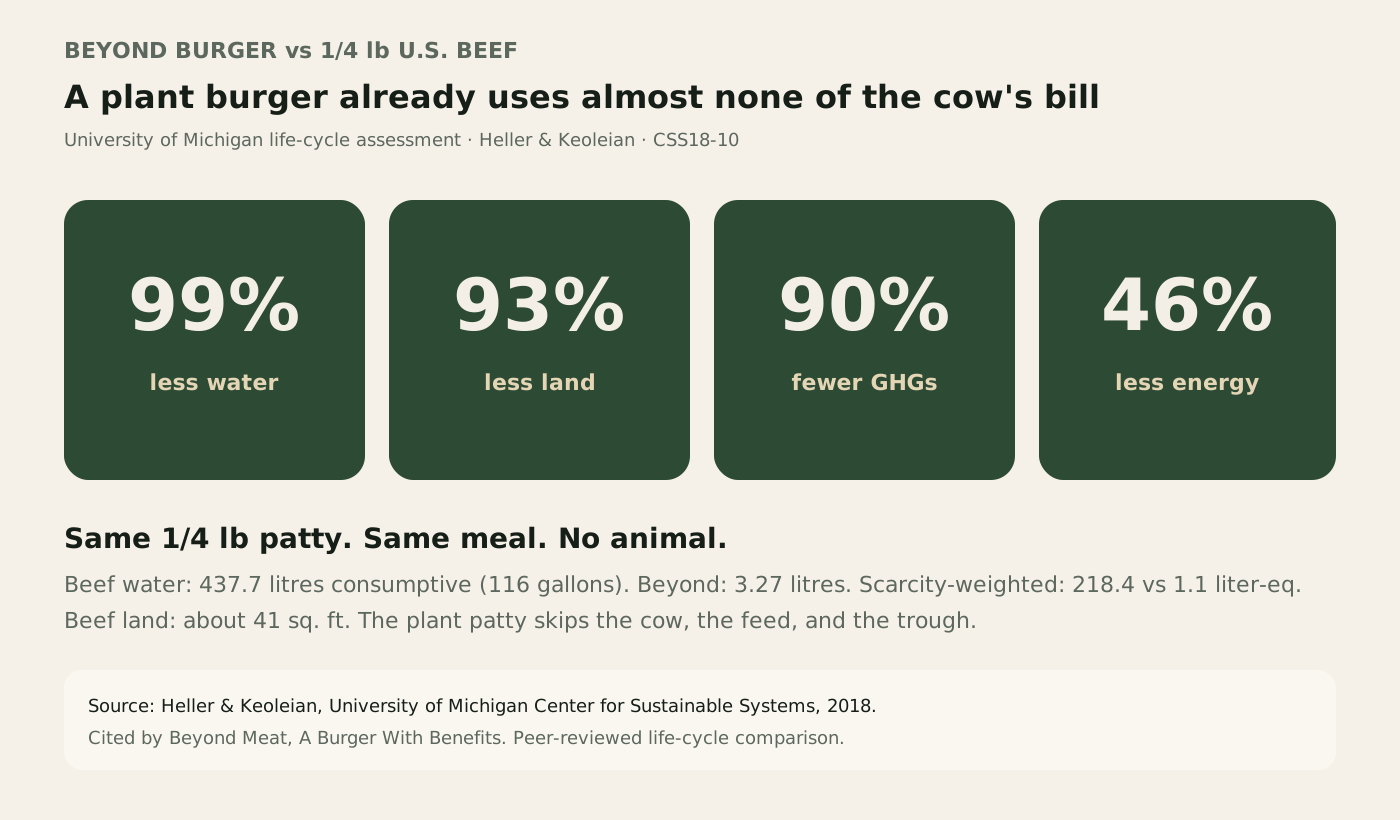
University of Michigan LCA · cited by Beyond Meat, A Burger With Benefits
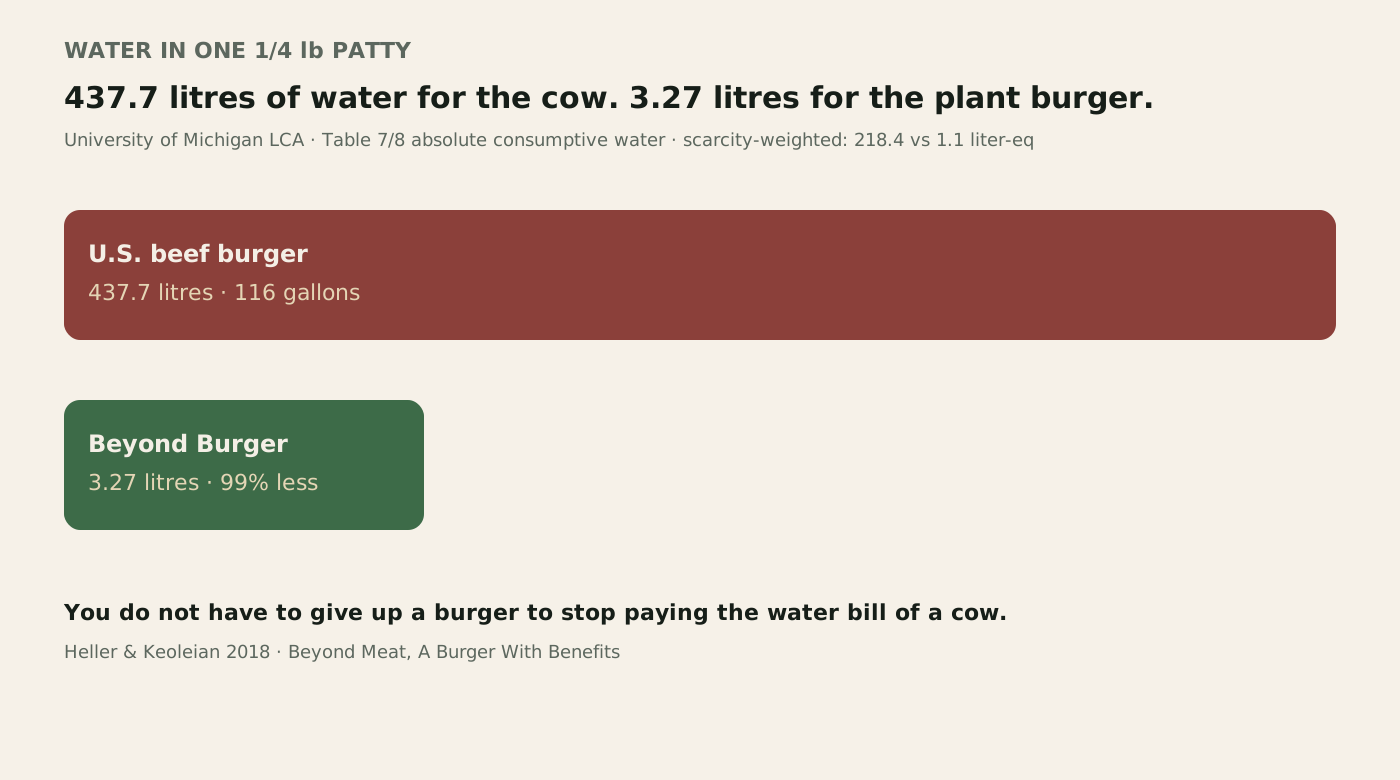
Heller & Keoleian, University of Michigan, CSS18-10
Vegan burgers already use about 99% less water than beef
The same Michigan study, the one Beyond Meat cites, compared a ¼ lb Beyond Burger with a ¼ lb U.S. beef burger[1][2]. The plant patty used 99% less water, 93% less land, 90% fewer greenhouse gases, and 46% less energy[1][2]. Table ES1 reports scarcity-weighted water: 1.1 liter-eq for Beyond versus 218.4 liter-eq for beef[2]. Tables 7 and 8 report the actual consumptive volume, 3.27 litres for Beyond versus 437.7 litres for beef, which is still more than 99% less[2]. 437.7 litres is about 116 gallons. Once rain on pasture and feed is counted, Mekonnen and Hoekstra put beef near 15,400 litres per kilogram globally, about 460 gallons for a quarter pound[4]. You can keep your burger and still stop paying a cow’s water bill, because the vegan version is already on the shelf.
Read full article →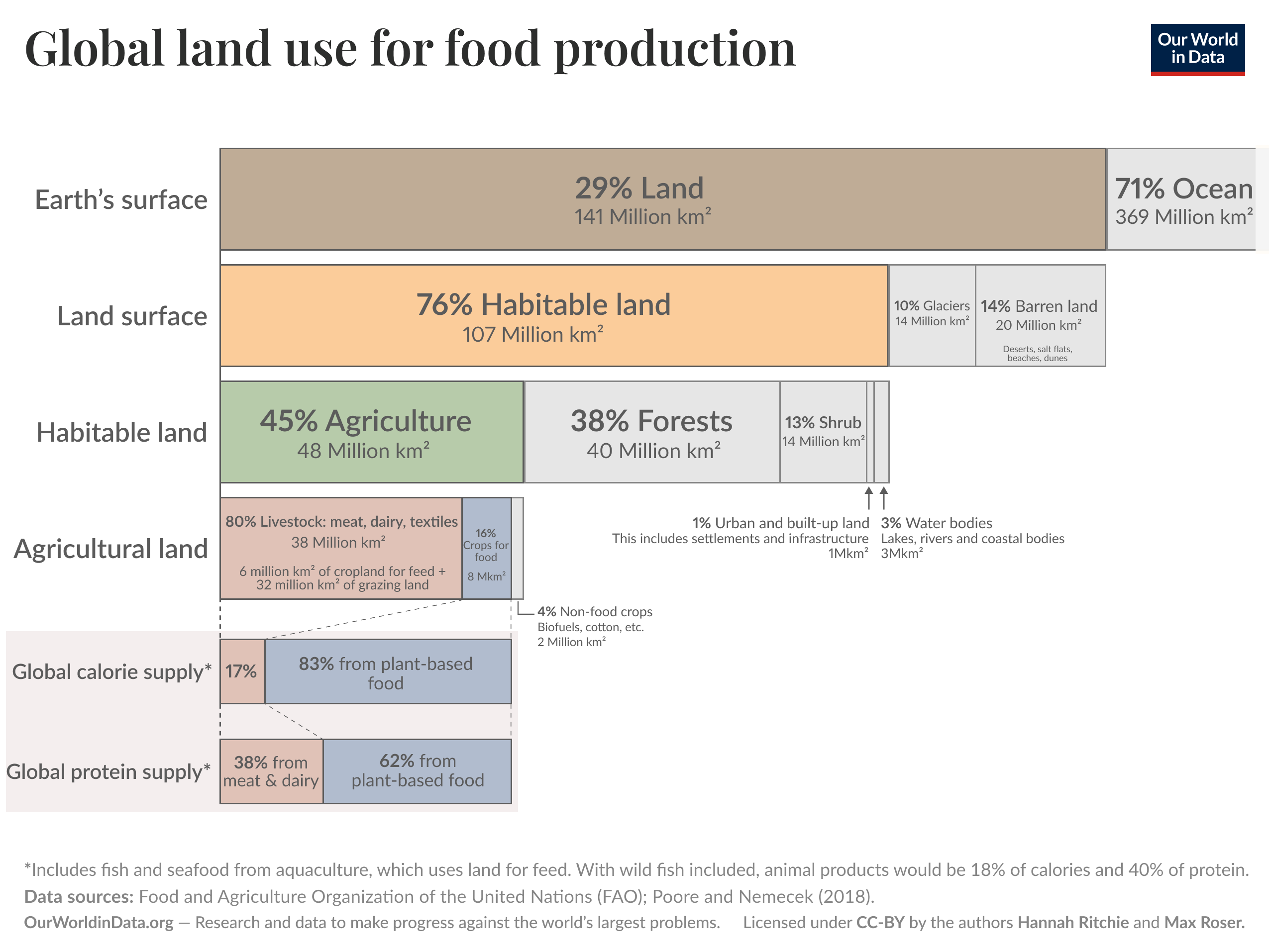
Our World in Data · How is the world’s land used?
Farm animals take up continents; data centers take up industrial parks
According to Our World in Data, drawing on FAO and on Poore and Nemecek, about 44% of habitable land is already farmed, about 48 million km²[1][2]. Grazing and feed for farm animals take about 80% of that farmland[1][2], an area on the order of the Americas. A worldwide vegan diet would shrink farmland from about 4.1 billion hectares to about 1 billion[1][2]. Industry tallies put the world near 10,000 data centers. Give every one of those sites 200 acres and the total is about 8,000 km², a fraction of one percent of the land used for farm animals. Some new halls are being poured on former fields, but that is a local planning fight, not a global land budget to set beside cows.
Read full article →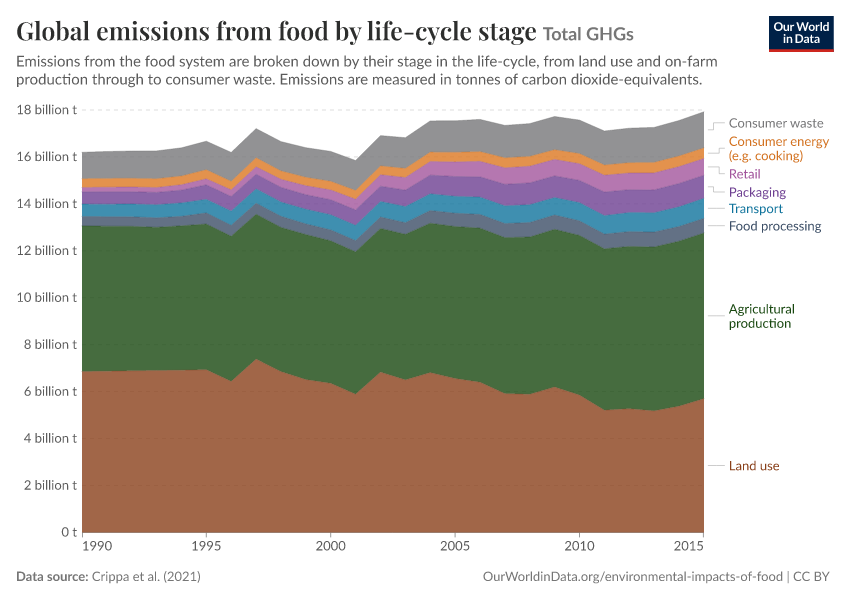
Our World in Data · Poore & Nemecek (2018)
Farm animals’ climate footprint is about 40 times all data-center emissions
The IEA put electricity use by the world’s data centers at about 415 TWh in 2024[1], about 1.5% of global electricity[1], and the CO₂ from that power at about 180 million tonnes[1], on the order of 0.5% of world CO₂[1]. Its 2035 base case is about 300 million tonnes, still under 1.5% of energy-sector emissions. FAO’s assessment of farm animals is in a different league: about 14.5% of all human greenhouse gases[3], or about 7.1 billion tonnes of CO₂-equivalent[3], mostly from methane, manure, and the land cleared to grow feed[3]. 7.1 billion divided by 180 million is about 40[1][3]. Poore and Nemecek put the whole food system at 26% of global GHGs[4], and Xu and colleagues found animal foods, including feed, account for about 57% of food-system emissions[5]. Data centers are a real and growing electricity load, but breeding tens of billions of animals is a far bigger climate problem[1].
Read full article →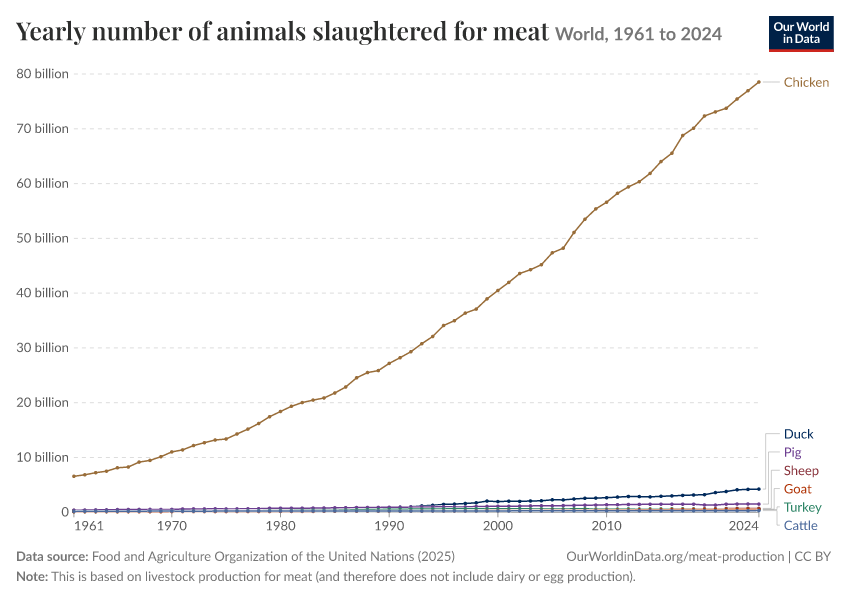
Our World in Data / FAO slaughter statistics
Animal agriculture kills about 88 billion land animals a year; AI has no slaughter line
Faunalytics, working from FAO slaughter data, counts about 87.9 billion land animals killed for food in 2024[1], about 241 million a day[1], and chickens alone were about 78.5 billion[1]. Add farmed finfish (about 130 billion a year) and a wild catch estimated at 1.1 to 2.2 trillion fish, and the food system is the largest killing on the planet. AI does not raise, crate, or stun animals for output. Construction and power lines can harm wildlife the way any factory can, but that incidental harm is a different category from breeding tens of billions of animals in order to kill them. Ask which industry kills the most animals and the answer is animal agriculture.
Read full article →Local water stress is real, but it doesn’t change the global ranking
A hyperscale hall can pull millions of gallons a day, and more than 40% of U.S. data centers sit in high water-stress regions. Those facts matter to the town next door, but they do not make AI larger than farm animals. Farm animals push a share of the world’s rivers past freshwater limits, and most of that water is feed irrigation spread across basins. Both things are true: don’t put a cooling tower on a failing aquifer, and don’t pretend a chat window is the main drain. The main drain is the feedlot.
Read full article →Articles
Farm animals use far more water, land and climate than AI
Farm animals use about 200 times more freshwater than AI data centers are projected to use, and their climate footprint is about 40 times all data-center emissions. Next to animal agriculture, AI’s resource use is small.
Read full article →
One beef burger uses the water of about 1.4 million AI prompts
OpenAI puts an average ChatGPT query at about 0.32 millilitres of water. A quarter-pound beef patty takes about 437.7 litres, so one burger equals about 1.4 million prompts.
Read full article →
Sources
Papers and datasets. Each card keeps its caveats, including small samples and single-animal cases.
[1]The Verge / OpenAI · Review
OpenAI — water used by an average ChatGPT query
Sam Altman published an average ChatGPT query at about 0.32 millilitres of water. Against the Michigan 1/4 lb beef patty’s 437.7 litres of consumptive water, that is about 1.4 million prompts, the central example. Against Mekonnen and Hoekstra’s ~1,750 litres for the same quarter pound, it is about 5.5 million.
[2]University of Michigan CSS, 2018 · Review
Beyond Meat’s Beyond Burger life-cycle assessment
Heller & Keoleian, University of Michigan: a 1/4 lb Beyond Burger uses 99% less water, 93% less land, 90% fewer greenhouse gases, and 46% less energy than a 1/4 lb U.S. beef burger. Absolute consumptive water: 437.7 litres for beef, 3.27 litres for Beyond. Scarcity-weighted: 218.4 liter-eq versus 1.1 liter-eq.
[3]Beyond Meat, 2018 · Review
A Burger With Benefits — Beyond Meat
Beyond Meat’s summary of the Michigan LCA: 99% less water, 93% less land, 90% fewer GHGs, 46% less energy versus a 1/4 lb U.S. beef burger.
[4]Ecosystems, 2012 · Review
Mekonnen & Hoekstra — water footprint of farm animal products
Global average water footprint of beef is about 15,400 litres per kilogram (green, blue, and grey), so a quarter-pound patty is about 1,750 litres, around 460 gallons. Against OpenAI’s 0.32 ml that is about 5.5 million prompts; against Li et al.’s 10–50 ml, tens of thousands to hundreds of thousands.
[5]Water, 2024 · Observational
Livestock agri-food freshwater use
Wisser et al.: animal agri-food systems consume about 228 km3 of freshwater a year, more than 90% of it in feed production.
[6]FoodFacts · Review
How much water does AI use vs livestock?
FoodFacts summary of Morgan Stanley and other reported figures: AI data-center water near 1 km3 in 2028, against 228 km3 for farm animals, or on the order of 200 times smaller.
[7]Lawrence Berkeley National Laboratory, 2024 · Review
2024 LBNL U.S. Data Center Energy Usage Report
U.S. data centers used about 66 billion litres on-site in 2023, with a 2028 on-site range of about 150–275 billion litres. Indirect water at power plants is larger, and farm animals still use more.
[8]arXiv, 2023 · Review
Making AI Less Thirsty
Li et al. 2023: GPT-3 consumes about a 500 ml bottle of water for roughly 10–50 medium-length replies (about 10–50 ml each), depending on when and where it runs. Against the Michigan 1/4 lb beef patty (437.7 litres consumptive), that is about 8,800 to 44,000 prompts, the low end of the range.
[9]CBS News · Review
CBS News — how much water does AI really use?
Americans use more water to grow food, especially meat, than all U.S. data centers use combined.
[10]Faunalytics / FAO · Observational
Faunalytics — global animal slaughter
About 87.9 billion land animals were killed for food in 2024. AI has no slaughter line.
[11]Science, 2018 · Meta-analysis
Poore & Nemecek — reducing food’s environmental impacts
Avoiding meat and dairy is the single biggest way to cut a meal’s land, water, and climate impact. Food is about 26% of global greenhouse gases.
[12]IEA, 2025 · Review
IEA — Energy and AI
Data centres used about 415 TWh in 2024, about 1.5% of world electricity, and the CO₂ from that power was about 180 million tonnes, on the order of 0.5% of world CO₂. FAO puts farm animals near 14.5% of all human greenhouse gases, about 40 times larger.
[13]FAO, 2013 · Review
FAO — Tackling climate change through livestock
Farm-animal supply chains accounted for about 14.5% of human-caused greenhouse gases, about 7.1 billion tonnes of CO₂-equivalent, from methane, manure, and land converted for feed.