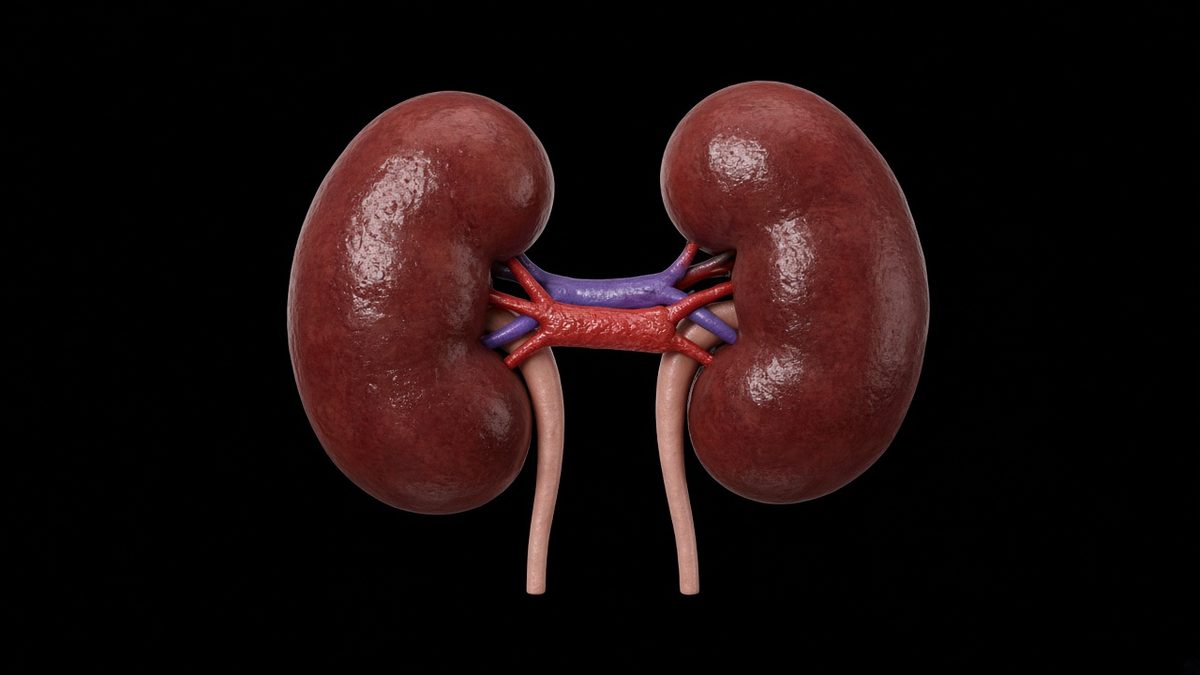
Kidneys
Kidney disease tracks with red meat
40%More kidney failure in the top quarter of red-meat eaters
Kidneys filter whatever the diet sends them, and red meat is the food most consistently tied to losing that function. In the largest cohorts, people eating the healthiest plant-based diets developed less chronic kidney disease and lost filtering capacity more slowly[1], while red meat tracked with kidney failure in a straight dose-response line[2]. Poultry, fish, eggs and dairy showed no such link[2], which points to red meat specifically rather than protein in general[2].
What the evidence says
The main points first. Every claim is tied to a source below.
Healthier plant-based diets came with less new kidney disease
Researchers followed 14,686 middle-aged adults for a median of 24 years, during which there were 4,343 new cases of chronic kidney disease[1]. The healthiest plant-based diets came with 14% less of it and a slower decline in filtering rate[1], while diets built on less healthy plant foods came with 11% more[1]. Among 3,618 people whose uric acid was already high, a known route to kidney damage[2], vegans had 31% lower odds of chronic kidney disease than omnivores, with lacto-ovo vegetarians in between[2].
Read full article →Red meat tracked with kidney failure, dose by dose
Among 63,257 adults in Singapore followed for 15.5 years, 951 reached end-stage kidney failure[1]. The top quarter of red-meat eaters had 40% more, with risk rising steadily with the dose[1], and replacing one daily serving of red meat with another protein source came with up to 62% lower risk[1]. Poultry, fish, eggs and dairy showed no such association[1], which points at red meat specifically rather than protein in general[1].
Read full article →Articles
Kidneys do better on plant-based diets and worse with red meat
In large cohorts, the healthiest plant-based diets came with less chronic kidney disease and slower loss of kidney function, while red meat tracked with kidney failure in a dose-response line.
Read full article →
Sources
Papers and datasets. Each card keeps its caveats, including small samples and single-animal cases.
[1]Clinical Journal of the American Society of Nephrology, 2019 · Observational
Plant-based diets and new cases of chronic kidney disease
14,686 middle-aged adults followed a median 24 years, 4,343 new cases: the healthiest plant-based diets came with 14% less chronic kidney disease and slower decline in filtering rate. Diets built on less healthy plant foods ran 11% higher, so the quality of the plants mattered.
[2]Journal of the American Society of Nephrology, 2017 · Observational
Red meat and kidney failure
63,257 adults in Singapore, 951 cases of end-stage kidney failure over 15.5 years. The top quarter of red-meat eaters had 40% more, rising steadily with the dose. Poultry, fish, eggs and dairy showed no association, and replacing one serving of red meat a day with another protein source came with up to 62% lower risk.
[3]Nutrients, 2023 · Observational
Vegan diets when uric acid is already high
Among 3,618 patients with hyperuricemia, a known route to kidney damage, vegans had 31% lower odds of chronic kidney disease than omnivores after adjustment, with lacto-ovo vegetarians in between. The design is cross-sectional, so it shows a snapshot and cannot say which came first.