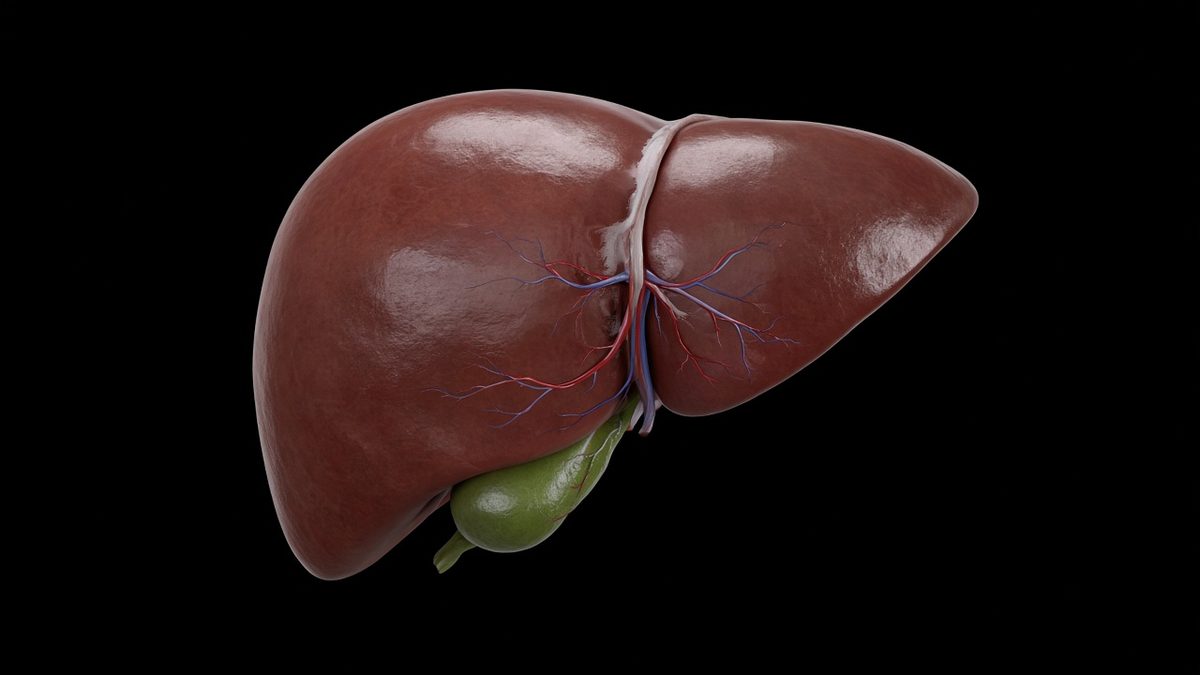
Liver
Fatty liver goes the way the plate goes
36%Lower odds of fatty liver on the healthiest plant-based diets
Fatty liver disease now affects a large share of adults, and with no drug treatment worth the name, diet is the treatment. Healthy plant-based patterns come with substantially lower odds of it[1][2], and in one older population the disease actually regressed on a plant-based, high-fibre, low-fat diet[3]. The usual catch applies: an overall plant-based score with no weighting for quality shows nothing[1], and red meat is the food group most clearly on the other side[4].
What the evidence says
The main points first. Every claim is tied to a source below.
The healthiest plant-based diets came with 36% lower odds of fatty liver
In 3,900 US adults, liver fat was measured directly by elastography rather than estimated from blood work[1]. The healthiest plant-based diets came with 36% lower odds of fatty liver disease even after accounting for body mass index[1], while an unweighted plant-based score showed no link at all[1]. A survey of 18,345 adults found 21% lower odds in the top third, along with better liver enzymes across the board[2].
Read full article →In Rotterdam, fatty liver regressed on a plant-based, high-fibre diet
Researchers scanned 963 older adults twice, a median 4.4 years apart[1]. Fatty liver regressed in 30% of those who had it[1], and of all the dietary patterns tested, adherence to a plant-based, high-fibre, low-fat pattern was the one that tracked with the regression[1]. A pooled analysis of 24 studies across 11 food groups linked red meat and soft drinks with higher odds of fatty liver and nuts with lower odds[2].
Read full article →Articles
Fatty liver is rarer on healthy plant-based diets
The healthiest plant-based diets came with 36% lower odds of fatty liver disease, and in Rotterdam a plant-based, high-fibre, low-fat pattern tracked with the disease going away. Red meat sits on the other side.
Read full article →
Sources
Papers and datasets. Each card keeps its caveats, including small samples and single-animal cases.
[1]Nutrients, 2022 · Observational
A healthful plant-based diet and fatty liver
3,900 US adults had their liver fat measured directly by elastography rather than estimated. The healthiest plant-based diets came with 36% lower odds of fatty liver disease even after accounting for body mass index; an unweighted plant-based score showed no association at all.
[2]Clinical Nutrition, 2019 · Observational
Plant-based diet scores in 18,345 adults
In a US national survey, the top third of plant-based diet scores had 21% lower odds of fatty liver disease along with better liver enzymes across the board. Scores built from unhealthy plant foods moved in the opposite direction on every measure.
[3]European Journal of Epidemiology, 2020 · Observational
Fatty liver that went away
963 older adults in Rotterdam were scanned twice, a median 4.4 years apart. Fatty liver regressed in 30% of those who had it, and of all the dietary patterns tested, adherence to a plant-based, high-fibre, low-fat pattern was what tracked with the regression.
[4]British Journal of Nutrition, 2020 · Meta-analysis
Which foods track with fatty liver
Pooling 24 studies across 11 food groups, red meat and soft drinks came with higher odds of fatty liver disease (red meat about 12% higher) and nuts with lower. Whole grains, refined grains, fish, fruit, vegetables, eggs, dairy and legumes showed no significant effect either way.